
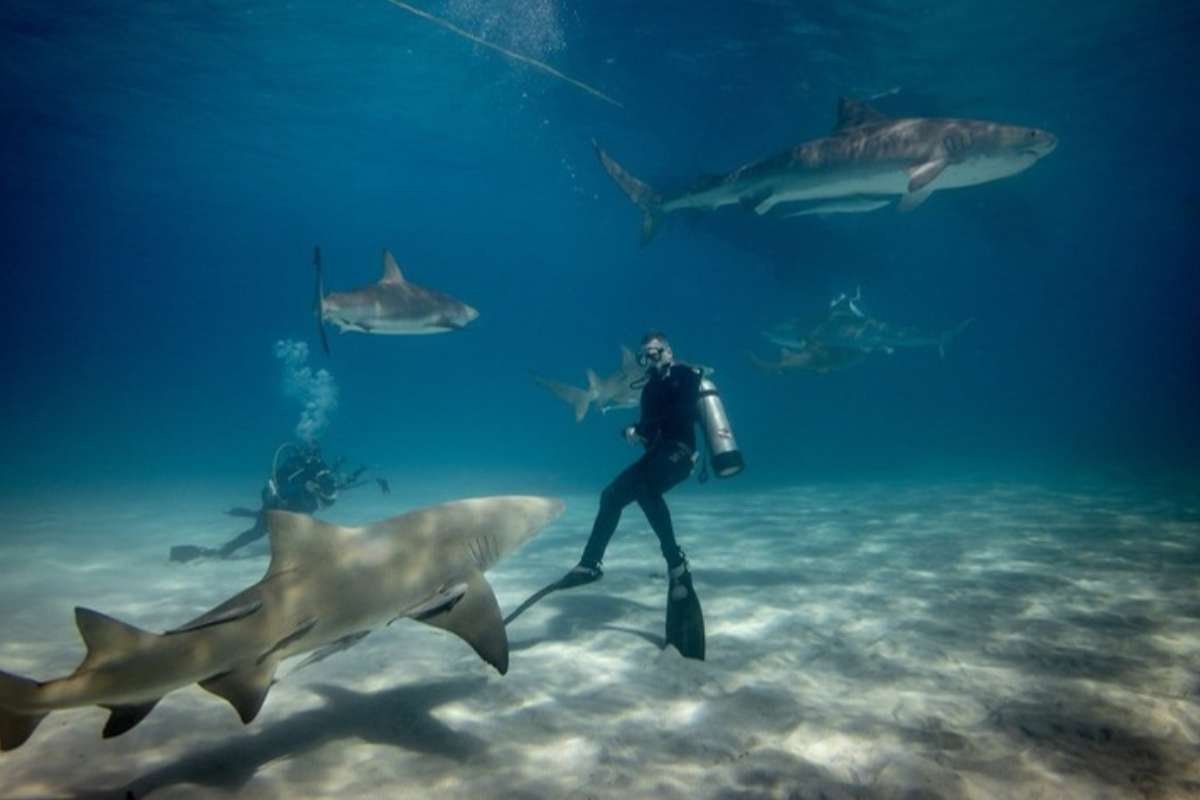
We have explored more of the Moon’s surface than the bottom of our own oceans. The deep sea — generally defined as water below 200 metres — covers roughly 65% of Earth’s surface and remains largely unknown. What we have found there defies imagination.
Here are 10 of the most extraordinary deep sea creatures ever discovered — real animals, all of them.
1. The Barreleye Fish (Macropinna microstoma)
This fish has a transparent, fluid-filled head through which its tubular eyes can rotate — pointing upward to spot prey silhouetted against faint surface light, or forward to focus on food directly ahead. When first observed by ROVs, scientists initially thought the greenish organs inside the transparent dome were its eyes. They were actually its olfactory organs. The real eyes are the green tubes.
Source: Robison et al., Marine Biology (2009)
2. The Vampire Squid (Vampyroteuthis infernalis)
Its scientific name literally means “vampire squid from hell.” Despite the name, it is neither a true squid nor an octopus — it occupies its own separate order. It lives in the oxygen minimum zone at 600–900 metres, where oxygen levels are too low for most predators. When threatened, it inverts its webbed cloak over itself like Dracula’s cape, exposing spike-like projections. Its eyes — at 2.5cm diameter relative to body size — are the largest of any animal on Earth.
3. The Dumbo Octopus (Grimpoteuthis spp.)
Named for the ear-like fins on either side of its mantle that it uses to propel itself — and which look eerily like Disney’s Dumbo — this octopus lives deeper than any other octopus species, at depths up to 7,000 metres. It swallows prey whole, unlike shallow-water octopuses that bite and tear. Researchers have observed it at the crushing pressures of the hadal zone, seemingly untroubled.
4. The Anglerfish
The anglerfish’s bioluminescent lure — a modified spine dangling in front of its enormous, fang-filled jaws — is iconic. Less well-known is its extraordinary reproduction: the male anglerfish is tiny compared to the female and has no digestive system of its own. When it finds a female, it bites her skin and their tissues fuse permanently. His circulatory system merges with hers; he becomes a permanent sperm-producing parasite. One female has been found carrying eight males fused to her body.
Source: Miya et al., Science (2010)
5. The Siphonophore (Praya dubia)
At up to 50 metres long, the giant siphonophore is arguably the longest animal on Earth — longer than a blue whale. But here is the truly strange part: it is not really one animal. It is a colonial organism composed of thousands of genetically identical individuals called zooids, each specialised for a different function — jet propulsion, prey capture, digestion, or reproduction — that cannot survive independently.
6. The Goblin Shark (Mitsukurina owstoni)
Called a “living fossil,” this shark’s lineage dates back 125 million years. Its most distinctive feature is its highly extendable jaw — normally retracted flush with its snout, it can project outward rapidly to snap up prey, like a biological spring-loaded trap. It has been called the most alien-looking shark alive.
7. The Hydrothermal Vent Tube Worm (Riftia pachyptila)
Growing up to 2.4 metres long around hydrothermal vents at 2,500 metres depth, these worms have no mouth, stomach, or gut. They survive entirely through bacteria living inside a specialised organ called the trophosome, which converts the vent’s hydrogen sulphide into energy via chemosynthesis — a form of life that requires no sunlight whatsoever and changed our understanding of where life can exist.
Source: WHOI — Tube Worms
8. The Blobfish (Psychrolutes marcidus)
Voted the world’s ugliest animal in 2013, the blobfish looks like a melting, miserable face — but only at the surface. In its natural habitat at 900–1,200 metres, it actually looks like a normal fish. The “blobby” appearance is caused by decompression damage when it is brought to the surface. In the deep, it is a sleek and functional predator, drifting with the current and swallowing whatever organic matter floats past.
9. The Mantis Shrimp’s Cousin — the Skeleton Shrimp
Found at abyssal depths, skeleton shrimps (Caprella spp.) look like something from a fever dream — near-transparent, skeletal, and moving in an unsettling praying-mantis style. They cling to corals and sponges and strike at passing prey with astonishing speed. Some species live at depths exceeding 4,000 metres.
10. The Immortal Jellyfish (Turritopsis dohrnii)
Technically found at various depths, this tiny jellyfish earns its place here for the most extraordinary adaptation of all: it is biologically immortal. When stressed, injured, or old, it can revert its cells back to their earliest form — a polyp — and begin its life cycle again from scratch. This process, called transdifferentiation, is unique in the animal kingdom and has attracted intense scientific interest for its potential implications in ageing research.
Source: Piraino et al., Biological Bulletin (1996)
The Bottom Line
Scientists estimate we have explored less than 20% of the ocean floor in any meaningful detail. If the 10 creatures above are what we have found so far, the question is not whether stranger things exist in the deep — it is what on Earth (or rather, beneath it) we have not yet found.