Home Blog Page 3

How Do Vaccines Work? The Complete Science Explained

0

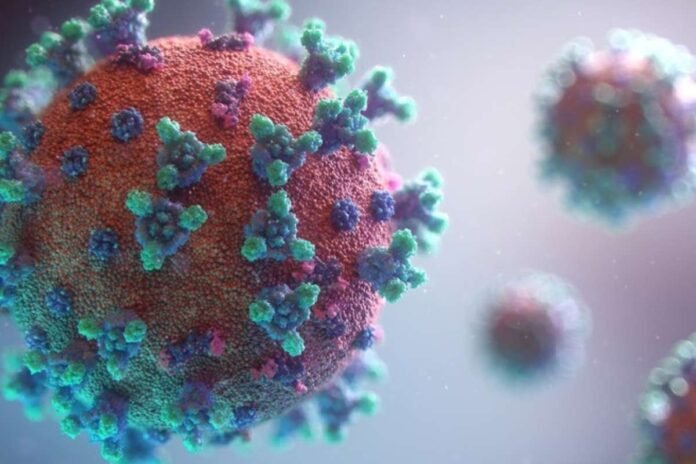
Vaccines have eradicated smallpox, nearly eliminated polio, and save an estimated 2–3 million lives every year according to the World Health Organization. Despite this, many people have only a vague sense of how they actually work. The science is fascinating — and understanding it helps explain why vaccines are so effective, and why new technologies like mRNA vaccines are so significant.

Source: World Health Organization — Vaccines

The Immune System: Your Body’s Defence Network

To understand vaccines, you first need to understand the immune system. When a pathogen (a bacteria or virus) enters your body, your immune system launches a two-pronged attack:

Innate Immunity — The First Responders

The innate immune system responds immediately but non-specifically. It recognises general signs of a foreign invader — certain molecular patterns found on bacteria and viruses — and launches inflammation, fever, and sends white blood cells to the site of infection. This buys time while the more powerful adaptive response gears up.

Adaptive Immunity — The Specialists

The adaptive immune system is slower (taking days to weeks) but devastatingly precise. It involves:

  • B cells: Produce antibodies — Y-shaped proteins that bind to specific antigens (molecular markers) on pathogens, neutralising them or tagging them for destruction
  • T cells: Some T cells (helper T cells) coordinate the immune response; others (cytotoxic T cells) directly kill infected cells
  • Memory cells: After the infection is cleared, some B and T cells become long-lived memory cells that patrol the body for years or decades

The memory cells are the key to vaccination. If the same pathogen appears again, memory cells recognise it immediately and launch a rapid, overwhelming response — often clearing the infection before you even feel ill.

What Vaccines Do

A vaccine trains your immune system to recognise a specific pathogen — without causing the disease itself. It introduces something that resembles part of the pathogen (or, with modern vaccines, instructions for your cells to make a resemblance), triggering an immune response and creating memory cells.

If you later encounter the real pathogen, your memory cells recognise it instantly and respond rapidly enough to prevent serious illness.

Types of Vaccines

1. Live-Attenuated Vaccines

Use a weakened but living version of the pathogen. Because it is still alive and replicating, the immune response is strong and long-lasting. Examples: measles-mumps-rubella (MMR), chickenpox, yellow fever. Generally not suitable for immunocompromised individuals.

2. Inactivated Vaccines

Use a killed version of the pathogen. Safer than live vaccines but often produce a weaker response, requiring booster doses. Examples: flu shot (most types), polio (injected), hepatitis A.

3. Subunit, Recombinant, and Conjugate Vaccines

Use only specific pieces of the pathogen — usually proteins from its outer surface — rather than the whole pathogen. Extremely safe; no risk of infection. Examples: hepatitis B, HPV (Gardasil), whooping cough component of DTaP.

4. Toxoid Vaccines

Target not the pathogen itself but the toxins it produces. Examples: tetanus and diphtheria vaccines teach the immune system to neutralise the dangerous toxins these bacteria release.

5. mRNA Vaccines — The New Generation

The COVID-19 vaccines from Pfizer-BioNTech and Moderna introduced mRNA technology to the world — though it had been in development for decades. Instead of introducing part of the pathogen, mRNA vaccines deliver genetic instructions that your own cells use to temporarily produce a harmless viral protein (for COVID-19, the spike protein). Your immune system learns to recognise this protein and builds memory against it.

Crucially, mRNA never enters the cell nucleus and cannot affect your DNA. It degrades within days. The technology is now being applied to cancer vaccines, flu vaccines, and HIV vaccines in clinical trials.

Source: CDC — mRNA Vaccines

What Is Herd Immunity?

When a sufficient proportion of a population is immune — through vaccination or prior infection — the pathogen struggles to find new hosts and its spread slows or stops. This protects people who cannot be vaccinated (newborns, immunocompromised individuals). The threshold varies by how contagious the disease is: measles requires ~95% immunity; polio ~80–85%.

Are Vaccines Safe?

Vaccines undergo the most rigorous safety testing of any medical product — typically 10–15 years from development to approval, involving tens of thousands of participants in clinical trials. Post-approval, they continue to be monitored by systems like the US Vaccine Adverse Event Reporting System (VAERS) and WHO’s VigiBase.

Serious adverse events from vaccines are real but extremely rare — on the order of 1 in 100,000 to 1 in 1,000,000 doses for the most severe reactions. The risk of serious harm from the diseases vaccines prevent is orders of magnitude greater.

Source: WHO — Vaccine Safety
10 of the Most Bizarre Deep Sea Creatures Ever Discovered

0

We have explored more of the Moon’s surface than the bottom of our own oceans. The deep sea — generally defined as water below 200 metres — covers roughly 65% of Earth’s surface and remains largely unknown. What we have found there defies imagination.

Here are 10 of the most extraordinary deep sea creatures ever discovered — real animals, all of them.

1. The Barreleye Fish (Macropinna microstoma)

This fish has a transparent, fluid-filled head through which its tubular eyes can rotate — pointing upward to spot prey silhouetted against faint surface light, or forward to focus on food directly ahead. When first observed by ROVs, scientists initially thought the greenish organs inside the transparent dome were its eyes. They were actually its olfactory organs. The real eyes are the green tubes.

Source: Robison et al., Marine Biology (2009)

2. The Vampire Squid (Vampyroteuthis infernalis)

Its scientific name literally means “vampire squid from hell.” Despite the name, it is neither a true squid nor an octopus — it occupies its own separate order. It lives in the oxygen minimum zone at 600–900 metres, where oxygen levels are too low for most predators. When threatened, it inverts its webbed cloak over itself like Dracula’s cape, exposing spike-like projections. Its eyes — at 2.5cm diameter relative to body size — are the largest of any animal on Earth.

3. The Dumbo Octopus (Grimpoteuthis spp.)

Named for the ear-like fins on either side of its mantle that it uses to propel itself — and which look eerily like Disney’s Dumbo — this octopus lives deeper than any other octopus species, at depths up to 7,000 metres. It swallows prey whole, unlike shallow-water octopuses that bite and tear. Researchers have observed it at the crushing pressures of the hadal zone, seemingly untroubled.

4. The Anglerfish

The anglerfish’s bioluminescent lure — a modified spine dangling in front of its enormous, fang-filled jaws — is iconic. Less well-known is its extraordinary reproduction: the male anglerfish is tiny compared to the female and has no digestive system of its own. When it finds a female, it bites her skin and their tissues fuse permanently. His circulatory system merges with hers; he becomes a permanent sperm-producing parasite. One female has been found carrying eight males fused to her body.

Source: Miya et al., Science (2010)

5. The Siphonophore (Praya dubia)

At up to 50 metres long, the giant siphonophore is arguably the longest animal on Earth — longer than a blue whale. But here is the truly strange part: it is not really one animal. It is a colonial organism composed of thousands of genetically identical individuals called zooids, each specialised for a different function — jet propulsion, prey capture, digestion, or reproduction — that cannot survive independently.

6. The Goblin Shark (Mitsukurina owstoni)

Called a “living fossil,” this shark’s lineage dates back 125 million years. Its most distinctive feature is its highly extendable jaw — normally retracted flush with its snout, it can project outward rapidly to snap up prey, like a biological spring-loaded trap. It has been called the most alien-looking shark alive.

7. The Hydrothermal Vent Tube Worm (Riftia pachyptila)

Growing up to 2.4 metres long around hydrothermal vents at 2,500 metres depth, these worms have no mouth, stomach, or gut. They survive entirely through bacteria living inside a specialised organ called the trophosome, which converts the vent’s hydrogen sulphide into energy via chemosynthesis — a form of life that requires no sunlight whatsoever and changed our understanding of where life can exist.

Source: WHOI — Tube Worms

8. The Blobfish (Psychrolutes marcidus)

Voted the world’s ugliest animal in 2013, the blobfish looks like a melting, miserable face — but only at the surface. In its natural habitat at 900–1,200 metres, it actually looks like a normal fish. The “blobby” appearance is caused by decompression damage when it is brought to the surface. In the deep, it is a sleek and functional predator, drifting with the current and swallowing whatever organic matter floats past.

9. The Mantis Shrimp’s Cousin — the Skeleton Shrimp

Found at abyssal depths, skeleton shrimps (Caprella spp.) look like something from a fever dream — near-transparent, skeletal, and moving in an unsettling praying-mantis style. They cling to corals and sponges and strike at passing prey with astonishing speed. Some species live at depths exceeding 4,000 metres.

10. The Immortal Jellyfish (Turritopsis dohrnii)

Technically found at various depths, this tiny jellyfish earns its place here for the most extraordinary adaptation of all: it is biologically immortal. When stressed, injured, or old, it can revert its cells back to their earliest form — a polyp — and begin its life cycle again from scratch. This process, called transdifferentiation, is unique in the animal kingdom and has attracted intense scientific interest for its potential implications in ageing research.

Source: Piraino et al., Biological Bulletin (1996)

The Bottom Line

Scientists estimate we have explored less than 20% of the ocean floor in any meaningful detail. If the 10 creatures above are what we have found so far, the question is not whether stranger things exist in the deep — it is what on Earth (or rather, beneath it) we have not yet found.

SpaceX Starship Explained: The Most Powerful Rocket Ever Built

0

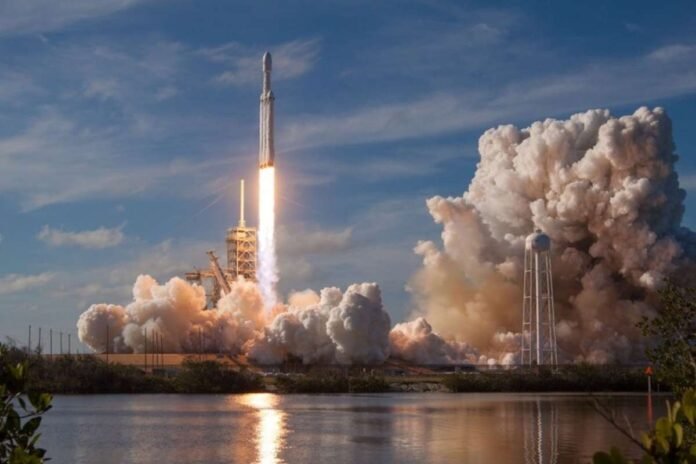
When SpaceX’s Starship lifts off, the ground shakes for miles around. It is the largest and most powerful rocket ever flown — generating nearly twice the thrust of the Saturn V that took humans to the Moon. But raw power is only part of the story. Starship is designed to be something no rocket has ever been: fully and rapidly reusable.

What Is Starship?

Starship is actually two vehicles stacked on top of each other:

  • Super Heavy — the first-stage booster, standing 71 metres tall, powered by up to 33 Raptor engines burning liquid methane and liquid oxygen (methalox). It generates approximately 74.3 meganewtons (16.7 million pounds) of thrust at liftoff.
  • Starship (the upper stage) — a 50-metre spacecraft powered by 6 Raptor engines, capable of carrying crew, cargo, or satellites. The complete stacked vehicle stands 121 metres tall — taller than the Statue of Liberty at its base.

Source: SpaceX — Starship

What Makes It Different?

Every orbital rocket in history has been expendable — used once and discarded. SpaceX changed that with Falcon 9, landing and reusing its first stage booster. Starship takes this further: both stages are designed to be fully reusable.

Super Heavy returns to the launch site and is caught mid-air by the launch tower’s “chopstick” arms — a system SpaceX calls Mechazilla. Starship re-enters the atmosphere belly-first, protected by ceramic heat shield tiles, then flips upright for a powered landing. The goal is to turn each vehicle around and refly within hours, like an aircraft — dramatically reducing the cost per kilogram to orbit.

The Test Flight History

Starship’s development has been characterised by SpaceX’s “test to failure” philosophy — building rapidly, flying, learning from failures, and iterating:

  • April 2023 (IFT-1): First integrated flight test. Vehicle exploded 4 minutes after launch. SpaceX called it a success — the launch pad survived and they gathered data.
  • November 2023 (IFT-2): Reached space for the first time. Both stages lost contact shortly after separation.
  • March 2024 (IFT-3): First successful reentry of the upper stage. Both vehicles lost during the return phase.
  • June 2024 (IFT-4): Both vehicles successfully controlled during reentry. Starship splashed down intact in the Indian Ocean. Super Heavy performed a precise “soft” ocean splashdown.
  • October 2024 (IFT-5): Super Heavy booster caught by the Mechazilla chopstick arms — a world first. Starship soft-landed in the Indian Ocean.

Source: FAA — SpaceX Starship

What Is It Designed For?

Starship’s ambitions span multiple missions:

  • NASA Artemis Moon landings: NASA selected a modified Starship as the Human Landing System (HLS) to land astronauts on the Moon under the Artemis programme
  • Mars colonisation: Elon Musk’s stated goal — a fully reusable, propellant-manufacturable-on-Mars vehicle capable of carrying 100 people and being refuelled in orbit
  • Satellite deployment: Can carry over 100 tonnes to low Earth orbit — more than any rocket in history
  • Point-to-point Earth travel: Long-term concept for intercontinental travel in under an hour

What About the Environmental Impact?

Each Starship launch produces significant acoustic and exhaust impacts on the surrounding area. SpaceX’s Boca Chica, Texas launch site has been the subject of environmental reviews by the FAA, with concerns raised about impacts on local wildlife refuges and ecosystems. The FAA has required SpaceX to implement environmental mitigations as a condition of launch licences.

Source: FAA Environmental Review

The Bigger Picture

If Starship works as designed, it could reduce the cost of reaching orbit from roughly $2,700/kg (Falcon 9) to under $100/kg — a 27-fold reduction that would fundamentally transform what is economically possible in space. Science missions, commercial stations, lunar bases, and eventually Mars become vastly more affordable.

No rocket in history has attempted what Starship is attempting. Whether it succeeds on Musk’s aggressive timelines or takes decades longer, it has already changed how the aerospace industry thinks about rocket design.

Nuclear Fusion Explained: The Clean Energy Breakthrough That Could Power Civilisation

0

In December 2022, scientists at the National Ignition Facility (NIF) in California achieved something humanity had been chasing for 70 years: nuclear fusion ignition. They produced more energy from a fusion reaction than the laser energy used to trigger it. It was a historic milestone — and the starting gun for a new era of energy research.

But what exactly is nuclear fusion, how does it work, and when — if ever — will it actually power our homes?

What Is Nuclear Fusion?

Nuclear fusion is the process that powers the Sun and every other star in the universe. It occurs when two light atomic nuclei — typically isotopes of hydrogen — are forced together under extreme heat and pressure until they fuse into a heavier nucleus, releasing an enormous amount of energy in the process.

This is the opposite of nuclear fission (which powers today’s nuclear power plants), where heavy atoms like uranium are split apart. Fusion releases 3–4 times more energy per kilogram of fuel than fission, and the fuel — hydrogen isotopes derived from water — is effectively limitless.

Why Is It So Hard?

Atomic nuclei are positively charged, and like charges repel each other. To force nuclei close enough to fuse, you need to overcome this electrostatic repulsion — which requires temperatures of 100 million degrees Celsius or more (hotter than the core of the Sun, which relies on immense gravitational pressure to compensate for lower temperatures).

At those temperatures, matter exists as a plasma — a superheated soup of electrons and nuclei. The central challenge of fusion research is containing and sustaining that plasma long enough to extract useful energy from it. No physical material can withstand those temperatures, so fusion reactors use powerful magnetic fields to hold the plasma in place.

The Two Main Approaches

Magnetic Confinement — Tokamaks

The most developed approach uses a doughnut-shaped device called a tokamak, which uses magnetic fields to confine plasma in a ring. The world’s largest tokamak, ITER, is under construction in southern France — a 35-nation project that will be the most complex machine ever built. ITER is designed to produce 10 times more energy than it consumes (Q=10), though it will not generate electricity — it is an experimental reactor.

Source: ITER Organisation

Inertial Confinement — Laser Fusion

The approach used at NIF fires 192 powerful lasers simultaneously at a tiny pellet of hydrogen fuel, compressing it so rapidly that it implodes and reaches fusion conditions for a brief moment. The December 2022 result — producing 3.15 megajoules from 2.05 megajoules of laser input — was the first time this “ignition” threshold was crossed.

Source: Science — NIF Ignition (2022)

Private Companies Racing Ahead

Alongside government projects, a wave of well-funded private fusion companies has emerged:

  • Commonwealth Fusion Systems (CFS) — MIT spinout targeting a demonstration plant by the late 2020s using high-temperature superconducting magnets
  • TAE Technologies — Backed by Google and others, pursuing a field-reversed configuration approach
  • Helion Energy — Has a deal with Microsoft to supply fusion electricity by 2028 — an extremely ambitious target
  • Tokamak Energy — UK company building compact spherical tokamaks

What Are the Benefits Over Fission?

  • Fuel: Deuterium (from seawater) and tritium (bred from lithium) — effectively unlimited
  • Safety: A fusion reactor cannot melt down — if anything goes wrong, the plasma simply cools and the reaction stops
  • Waste: No long-lived radioactive waste; reactor components become mildly radioactive but far less problematic than fission waste
  • Carbon: Zero COâ‚‚ emissions during operation

When Will We Have Fusion Power?

The honest answer is: not soon. The joke in fusion research — “fusion is 30 years away and always will be” — persists for a reason. But the field has accelerated dramatically.

Realistic timelines from credible sources suggest first demonstration power plants in the 2030s and commercial electricity in the 2040s at the earliest. Some optimistic private sector projections put it sooner, but engineering, regulatory, and economic hurdles remain enormous.

The December 2022 result proved the physics works. The remaining challenge is engineering — building systems that can repeat the reaction thousands of times per second, capture the energy efficiently, and do it economically at scale. That is still a formidable task. But for the first time in decades, the optimism feels earned.

James Webb Space Telescope: Every Major Discovery Explained (Updated 2026)

0

When the James Webb Space Telescope (JWST) released its first full-colour images in July 2022, it did not just show us the universe — it redefined what was possible in astronomy. Four years on, the discoveries keep coming. Here is a comprehensive breakdown of everything Webb has found and what it means.

What Is the James Webb Space Telescope?

JWST is the most powerful space telescope ever built, a joint project between NASA, the European Space Agency (ESA), and the Canadian Space Agency (CSA). It observes the universe primarily in infrared light, allowing it to see through dust clouds that blocked the Hubble Space Telescope’s view, and to observe objects so far away that their light has been stretched from ultraviolet into infrared over billions of years of travel.

Webb orbits the Sun at the second Lagrange point (L2) — about 1.5 million kilometres from Earth — where it remains in stable alignment with Earth and Sun. Its mirror spans 6.5 metres across, composed of 18 hexagonal gold-coated beryllium segments, giving it roughly 6.25 times the light-collecting area of Hubble.

Source: NASA JWST Mission Overview

The Earliest Galaxies Ever Seen

One of Webb’s most headline-grabbing achievements has been observing galaxies that formed just 200–400 million years after the Big Bang — far earlier than anyone expected to find such developed structures.

In 2022, Webb identified galaxy GLASS-z13, existing just 300 million years after the Big Bang. In 2023, it went further, confirming galaxies including JADES-GS-z14-0 at a redshift of z=14.32 — the most distant confirmed galaxy ever observed, from just 290 million years after the Big Bang.

These early galaxies were larger and more developed than theoretical models predicted, forcing cosmologists to revise their understanding of how quickly galaxies form after the Big Bang.

Source: Nature — JADES survey (2023)

Atmospheres of Exoplanets

Webb is revolutionising exoplanet science. In 2022, it produced the most detailed atmospheric analysis ever of an exoplanet — WASP-39b — detecting carbon dioxide, sulphur dioxide, water, and sodium. This was the first clear detection of CO₂ in an exoplanet atmosphere.

In 2023, Webb examined K2-18b, a “Hycean” world (potentially ocean-covered with a hydrogen atmosphere), and found a tentative signal of dimethyl sulphide (DMS) — a molecule that on Earth is only produced by living organisms. The finding was cautiously reported and requires further confirmation, but it remains one of the most tantalising biosignature hints ever detected.

Source: Nature Astronomy — K2-18b (2023)

Stellar Nurseries in Unprecedented Detail

Webb’s infrared vision allows it to peer into stellar nurseries — dense clouds of gas and dust where stars are being born — in extraordinary detail. The Carina Nebula and Orion Nebula images revealed hundreds of previously unseen protostars and planetary discs forming around young stars, providing direct evidence of how solar systems like ours form.

Rewriting Our Understanding of the Early Universe

The so-called “Hubble Tension” — a longstanding disagreement between different measurements of how fast the universe is expanding — has been a headache for cosmologists for years. Webb’s precise distance measurements of stars known as Cepheid variables have confirmed the tension is real and not the result of measurement error, deepening the mystery and potentially pointing to new physics beyond the standard cosmological model.

Source: Astrophysical Journal Letters — Hubble Tension (2023)

Our Own Solar System

Webb also turns its gaze closer to home. It has produced the sharpest infrared images ever of Neptune’s rings, revealed previously unknown rings around Uranus, captured seasonal changes in Mars’ atmosphere, and detected complex organic chemistry in the clouds of Jupiter.

What Comes Next?

Webb is expected to operate for at least 20 years — it had an exceptionally precise launch that used far less fuel than the worst-case scenario, extending its operational lifetime significantly. Upcoming targets include deeper surveys of early galaxies, more exoplanet atmospheres (including TRAPPIST-1 system planets in the habitable zone), and studies of dark matter distribution in galaxy clusters.

The telescope that has already rewritten astronomy has barely begun.

Why Do We Dream? What Neuroscience Actually Knows

0

Every night, most of us enter a strange mental world: vivid scenes, impossible events, forgotten faces, and emotions that feel entirely real — only to dissolve within minutes of waking. We spend roughly two hours per night dreaming, accumulating about six years of dream time over an average lifetime.

And yet, despite centuries of fascination and decades of scientific research, why we dream remains one of the biggest unanswered questions in neuroscience.

What Happens in the Brain When We Dream?

Most dreaming occurs during REM (Rapid Eye Movement) sleep — one of the four stages of sleep, characterised by rapid eye movements, increased brain activity, and temporary paralysis of the major muscle groups (which stops you from physically acting out your dreams).

During REM sleep, brain activity looks surprisingly similar to wakefulness. The visual cortex, emotional centres (especially the amygdala), and memory regions are all highly active. Meanwhile, the prefrontal cortex — associated with rational thinking and logical analysis — is relatively quiet, which may explain why dreams are so bizarre and why we rarely question them while they are happening.

The Main Theories of Dreaming

1. Memory Consolidation

One of the most widely supported theories is that dreaming plays a role in processing and consolidating memories. During REM sleep, the brain replays and reorganises experiences from the day, strengthening important memories and weakening unimportant ones.

Studies have shown that people perform better on memory tasks after a night of sleep — and that REM sleep deprivation impairs this benefit. Some researchers believe the narrative structure of dreams reflects this memory-sorting process.

2. Emotional Regulation

Another leading theory, championed by neuroscientist Matthew Walker, is that dreaming serves as a kind of emotional therapy. During REM sleep, stress hormones like noradrenaline are suppressed, allowing the brain to reprocess emotionally charged memories in a calmer neurochemical environment.

This may explain why we often dream about emotionally significant events, and why sleep deprivation is so closely linked to emotional dysregulation, anxiety, and depression. Walker calls REM sleep “overnight therapy.”

3. Threat Simulation

Finnish psychologist Antti Revonsuo proposed that dreaming evolved as a kind of virtual reality threat simulator. By rehearsing dangerous scenarios — being chased, falling, social conflicts — during the safety of sleep, our ancestors may have sharpened their responses to real-world threats.

This theory helps explain why nightmares are so common, and why threatening events are dramatically overrepresented in dreams compared to waking life.

4. Random Activation (The “Noise” Theory)

The activation-synthesis hypothesis, proposed by Harvard psychiatrists J. Allan Hobson and Robert McCarley in 1977, takes a more deflationary view: dreams are simply the brain’s attempt to make sense of random neural signals firing during REM sleep. On this view, dreams have no inherent meaning — they are narrative post-hoc rationalisations of neural noise.

Most modern neuroscientists consider this too reductive, but the insight that the brain actively constructs dream narratives from chaotic input remains influential.

5. Problem Solving and Creativity

Many people report waking with the solution to a problem they were struggling with the night before. Scientific studies have backed this up — subjects are better at solving certain insight problems after sleep, particularly after REM sleep.

Famous examples include chemist August Kekulé dreaming of a snake biting its own tail, which inspired the ring structure of benzene; and Paul McCartney reporting that the melody for Yesterday came to him in a dream.

Why Do We Forget Most Dreams?

Most dreams are forgotten within minutes of waking — and often immediately. This is largely due to the low levels of noradrenaline during REM sleep, which impairs the formation of new memories. The transition from REM sleep to wakefulness is often too abrupt for memories of the dream to consolidate properly.

People who wake up during or immediately after REM sleep (either naturally or via alarm) are more likely to remember their dreams. Keeping a pen and paper next to the bed and writing down dreams immediately upon waking is the most reliable way to improve dream recall.

What About Lucid Dreaming?

In a lucid dream, the dreamer becomes aware that they are dreaming and can often exert some control over the dream’s content. Lucid dreaming is a real, measurable phenomenon — brain scans show distinctive patterns of prefrontal cortex reactivation during lucid dreams that are not present in regular dreams.

Techniques like reality testing (regularly asking yourself whether you are dreaming during the day), the WILD technique (Wake-Initiated Lucid Dreaming), and MILD (Mnemonic Induction of Lucid Dreams) have been scientifically shown to increase lucid dream frequency.

The Bottom Line

Dreams are almost certainly not meaningless noise — the evidence for their role in memory consolidation and emotional regulation is compelling. But whether they serve a single primary function, or are the by-product of multiple overlapping processes, remains genuinely unknown. For now, dreaming remains one of the most fascinating frontiers in neuroscience — a nightly journey into the mind that science is only beginning to map.

What Is CRISPR? The Gene-Editing Tool That Could Change Medicine Forever

0

In 2012, scientists Jennifer Doudna and Emmanuelle Charpentier published a paper describing a new molecular tool that could edit DNA with extraordinary precision. Nine years later, they shared the Nobel Prize in Chemistry for it. The tool was CRISPR-Cas9 — and it has been called one of the most important scientific discoveries of the 21st century.

But what exactly is CRISPR, how does it work, and what does it mean for medicine, agriculture, and humanity?

What Is CRISPR?

CRISPR stands for Clustered Regularly Interspaced Short Palindromic Repeats. It sounds intimidating, but the concept is elegant.

CRISPR was originally discovered as part of the immune system of bacteria. When a virus attacks a bacterium, the bacterium can capture snippets of the virus’s DNA and store them in its own genome in a region called a CRISPR array. If the same virus attacks again, the bacterium recognises it and cuts its DNA apart using a protein called Cas9 — essentially a pair of molecular scissors.

Scientists realised they could repurpose this system. By designing a short piece of RNA (called a guide RNA) that matches a specific DNA sequence in any organism, they could direct the Cas9 protein to cut the genome at exactly that location.

How Does CRISPR-Cas9 Work?

The process has three basic steps:

  1. Design the guide RNA: Scientists create a short RNA sequence that is complementary to the target DNA sequence they want to edit
  2. Deliver the CRISPR system: The guide RNA and Cas9 protein are delivered into the target cell (via a virus, nanoparticle, or other method)
  3. Cut and edit: The guide RNA leads Cas9 to the correct location in the genome, where it makes a precise cut. The cell’s own repair machinery then fixes the break — either disabling the gene (knockout) or allowing scientists to insert a new DNA sequence at that spot

Before CRISPR, gene editing existed but was slow, expensive, and imprecise. CRISPR is faster, cheaper, more accurate, and can be used in virtually any organism.

What Can CRISPR Do?

Medicine

The medical applications are staggering:

  • Genetic diseases: In 2023, the UK and US approved the first CRISPR-based treatment for human disease — Casgevy, a treatment for sickle cell disease and transfusion-dependent beta-thalassemia. It works by editing patients’ own stem cells to produce healthy haemoglobin.
  • Cancer: CRISPR-engineered immune cells are being trialled as cancer therapies, programmed to recognise and destroy tumour cells
  • HIV: Researchers have used CRISPR to remove HIV DNA from infected cells in animal models — a potential path toward a functional cure
  • Inherited blindness, muscular dystrophy, Huntington’s disease: All being studied in early-stage CRISPR trials

Agriculture

CRISPR is already being used to develop crops that are more resistant to disease, drought, and pests; that have longer shelf lives; and that have improved nutritional profiles — all without inserting foreign DNA from other species.

Infectious Disease

Scientists have used CRISPR to engineer mosquitoes that cannot carry malaria parasites, potentially offering a new tool against one of humanity’s oldest killers.

What Are the Concerns?

CRISPR raises serious ethical questions:

  • Designer babies: In 2018, Chinese scientist He Jiankui shocked the world by announcing he had used CRISPR to edit human embryos that were then brought to term — the world’s first gene-edited babies. He was widely condemned by the scientific community, sentenced to prison, and his work highlighted the urgent need for governance frameworks around heritable gene editing
  • Off-target effects: CRISPR is precise but not perfect — it can sometimes cut DNA at unintended locations, with unknown consequences
  • Equity: Who will have access to CRISPR-based therapies? Current treatments cost hundreds of thousands of dollars
  • Ecological risk: Releasing gene-edited organisms into wild ecosystems could have unpredictable effects

The Bottom Line

CRISPR is not a magic wand — but it is the closest thing to one that biology has ever produced. It is already treating real diseases in real people, and its potential over the coming decades is immense. Like all powerful technologies, its ultimate impact will depend not just on what it can do, but on how wisely we choose to use it.

How Does Quantum Computing Work? A Simple Explanation

0

You have probably heard that quantum computers will revolutionise everything from drug discovery to cryptography. But what actually is a quantum computer, and how is it different from the laptop or phone you are reading this on?

The answer requires understanding a bit of quantum physics — but do not worry, we will keep it simple.

Classical Computers vs Quantum Computers

Every classical computer — from your smartphone to the world’s most powerful supercomputers — processes information using bits. A bit is the smallest unit of data and can only be in one of two states: 0 or 1. Everything your computer does — every calculation, every image, every word — is ultimately a series of 0s and 1s.

A quantum computer uses qubits (quantum bits) instead. And here is where it gets interesting.

What Is Superposition?

In quantum mechanics, particles can exist in multiple states simultaneously until they are observed or measured. This property is called superposition.

A qubit, unlike a classical bit, can be 0, 1, or both 0 and 1 at the same time — until it is measured, at which point it collapses to one definite value.

Think of it this way: a classical bit is like a coin lying flat — it is either heads or tails. A qubit is like a coin spinning in the air — it is effectively both heads and tails simultaneously, until it lands.

With just 3 classical bits, you can represent one of 8 possible values (000, 001, 010… 111) at any given time. With 3 qubits in superposition, you can represent all 8 values simultaneously. Scale that up to 300 qubits, and you can represent more states simultaneously than there are atoms in the observable universe.

What Is Entanglement?

The second key quantum phenomenon is entanglement. When two qubits become entangled, the state of one is instantly correlated with the state of the other — no matter how far apart they are.

Measure one entangled qubit and you instantly know something about the state of the other. Einstein famously called this “spooky action at a distance” and was deeply uncomfortable with it — but it has been experimentally verified countless times.

Entanglement allows quantum computers to link qubits together in ways that create vastly more computational power than classical systems.

What Is Quantum Interference?

The third key tool is interference. Quantum algorithms are cleverly designed to amplify the probability of correct answers and cancel out wrong ones — similar to how noise-cancelling headphones work, but for calculations.

Together, superposition, entanglement, and interference are what make quantum computers powerful — not raw speed, but the ability to explore many possible solutions simultaneously and zero in on the right one.

What Can Quantum Computers Do?

Quantum computers are not better at everything — they are dramatically better at specific types of problems:

  • Drug discovery and molecular simulation: Simulating how molecules interact at the quantum level — something classical computers can barely do — which could lead to breakthrough medicines
  • Cryptography: A powerful enough quantum computer could theoretically break current encryption methods (which is why governments and tech companies are developing quantum-resistant encryption now)
  • Optimisation problems: Finding the most efficient route through millions of variables — useful for logistics, finance, and AI training
  • Machine learning: Accelerating certain AI training processes that are prohibitively slow on classical hardware

Where Are We Now?

Quantum computing is still in its early stages. Current quantum computers — from IBM, Google, Microsoft, and others — are noisy, error-prone, and require extreme cooling (near absolute zero, colder than deep space) to function.

In 2019, Google claimed quantum supremacy — performing a specific calculation in 200 seconds that would take a classical supercomputer 10,000 years. IBM disputed the figure, but it was a landmark moment.

In 2024, Microsoft announced a new type of qubit called a topological qubit, which is inherently more stable and less error-prone. IBM’s roadmap targets fault-tolerant quantum computing by the late 2020s.

A practical, general-purpose quantum computer that outperforms classical computers across a wide range of tasks — sometimes called a cryptographically relevant quantum computer — is likely still a decade or more away.

Should You Be Worried About Quantum Hacking?

Current encryption (like the RSA algorithm that secures most of the internet) is safe for now. But governments and cybersecurity experts are taking the long-term threat seriously. The US National Institute of Standards and Technology (NIST) finalised its first quantum-resistant encryption standards in 2024, and organisations are already beginning the slow process of upgrading their systems.

The Bottom Line

Quantum computers do not work by being faster versions of regular computers. They work by exploiting the strange rules of quantum mechanics — superposition, entanglement, and interference — to explore solutions to problems in ways classical computers simply cannot. They are not going to replace your laptop anytime soon, but for specific, complex problems, they promise to be transformative.

Black Holes Explained: What They Are, How They Form, and Why They Matter

0

Few things in science capture the imagination quite like black holes. They are regions of space where gravity is so extreme that nothing — not even light — can escape. They warp space and time, can grow to billions of times the mass of our Sun, and yet we cannot directly see them.

Despite their mysterious reputation, we know a remarkable amount about black holes — and we are learning more every year.

What Is a Black Hole?

A black hole is a region of space where the gravitational pull is so intense that the escape velocity exceeds the speed of light. Since nothing can travel faster than light, nothing that enters a black hole can get back out.

At the centre of every black hole is a singularity — a point (or ring, in rotating black holes) where matter is infinitely dense and our current laws of physics break down. Surrounding the singularity is the event horizon — the point of no return. Cross the event horizon and you are not coming back.

It is worth noting: black holes are not cosmic vacuum cleaners. They do not suck in surrounding matter any more than an ordinary massive object would. If our Sun were somehow replaced by a black hole of equal mass, Earth would continue orbiting in the same path it always has.

How Do Black Holes Form?

Black holes form through several processes:

Stellar Black Holes

When a massive star — at least 20 times the mass of our Sun — reaches the end of its life, it explodes in a supernova. If the remaining core has enough mass (more than about 3 solar masses), it collapses under gravity into a black hole. These are called stellar black holes and typically range from about 5 to 100 solar masses.

Supermassive Black Holes

At the centre of almost every large galaxy — including our own Milky Way — sits a supermassive black hole. These giants contain millions to billions of solar masses. How they formed is still one of the biggest open questions in astrophysics. They may have grown from smaller black holes merging over billions of years, or they may have formed through the direct collapse of enormous gas clouds in the early universe.

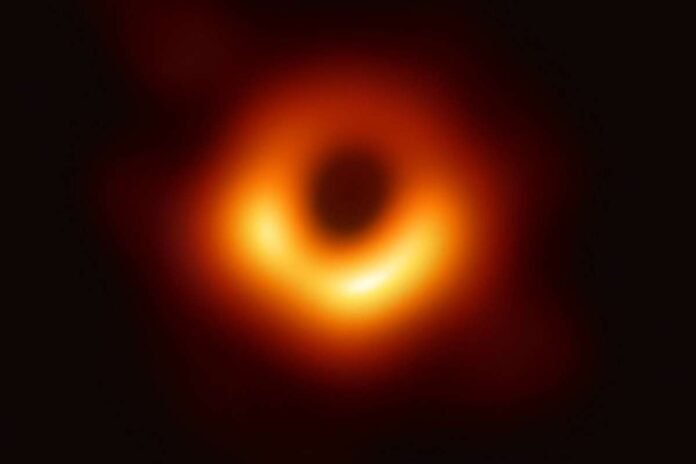
Our galaxy’s central black hole, Sagittarius A*, has a mass of about 4 million suns. In 2022, the Event Horizon Telescope collaboration published the first image of it — a glowing ring of hot gas surrounding a dark shadow.

Intermediate and Primordial Black Holes

Scientists also theorise the existence of intermediate black holes (hundreds to thousands of solar masses) and primordial black holes — hypothetical black holes formed in the extreme density of the early universe, fractions of a second after the Big Bang.

Can We See a Black Hole?

Not directly — but we can see their effects. Black holes reveal themselves through:

  • Gravitational lensing: Light from objects behind a black hole is bent around it, creating distorted or duplicated images
  • Accretion discs: When gas and dust spiral into a black hole, they heat up to millions of degrees and glow brilliantly in X-rays
  • Gravitational waves: When two black holes merge, they send ripples through spacetime that can be detected by instruments like LIGO
  • Event horizon images: In 2019, the Event Horizon Telescope captured the first direct image of a black hole’s shadow — the supermassive black hole M87*, 6.5 billion times the mass of the Sun

What Happens If You Fall Into a Black Hole?

From an outside observer’s perspective, you would appear to slow down as you approached the event horizon, gradually fading and redshifting until you seemed to freeze at the horizon — due to extreme time dilation.

From your own perspective (in a large enough black hole), you might not notice crossing the event horizon at all — at least initially. However, as you fell closer to the singularity, tidal forces would grow extreme enough to spaghettify you — stretching you vertically while compressing you horizontally — long before you reached the centre.

Do Black Holes Ever Die?

Yes — but incredibly slowly. Physicist Stephen Hawking theorised in 1974 that black holes emit a form of thermal radiation (now called Hawking radiation) and gradually lose mass over time. For stellar-mass black holes, the evaporation timescale is so astronomically long — far exceeding the current age of the universe — that it is effectively irrelevant for any practical purpose. But in principle, every black hole will eventually evaporate.

Should We Worry About Black Holes?

No. The nearest known black hole to Earth is Gaia BH1, discovered in 2022, sitting about 1,560 light-years away. It poses absolutely no threat to our solar system. At those distances, black holes are simply fascinating — not dangerous.

The Bottom Line

Black holes are not the terrifying destroyers of science fiction. They are extraordinary natural phenomena — the inevitable fate of massive stars, the anchors of galaxies, and windows into the most extreme physics in the universe. The more we study them, the more we learn about the fundamental nature of space, time, and gravity.

Where Is Voyager 1 Right Now? The Spacecraft That Left Our Solar System

0

Launched on September 5, 1977, NASA’s Voyager 1 spacecraft has been travelling away from Earth for nearly five decades. As of 2026, it sits more than 24 billion kilometres from our planet — so far that a radio signal travelling at the speed of light takes over 22 hours to make the one-way trip.

Voyager 1 is the most distant human-made object ever built, and remarkably, it is still alive.

Where Is Voyager 1 Right Now?

Voyager 1 is currently travelling through interstellar space — the vast region beyond our solar system’s protective bubble, known as the heliosphere. It officially crossed into interstellar space in August 2012, becoming the first human-made object to do so.

The spacecraft is moving at roughly 61,000 kilometres per hour, heading in the direction of the constellation Ophiuchus. At that speed, it would still take about 40,000 years to reach the next nearest star system, Proxima Centauri — and it is not even headed in that direction.

You can track Voyager 1’s real-time position using NASA’s Eyes on the Solar System tool, which shows its exact location updated with live telemetry data.

Is Voyager 1 Still Working?

Remarkably, yes — though it has had some scares. In late 2023, NASA engineers discovered that one of Voyager 1’s flight data system computers was sending back garbled data. After months of painstaking remote diagnosis (remember: every command takes 22+ hours to reach the spacecraft), engineers managed to reroute data around the faulty chip and restore full communications in April 2024.

The spacecraft is powered by radioisotope thermoelectric generators (RTGs) — essentially nuclear batteries that convert heat from the decay of plutonium-238 into electricity. These are slowly losing power; NASA expects Voyager 1 will have to begin shutting down science instruments one by one over the next few years as power drops below minimum thresholds.

Current estimates suggest Voyager 1 could remain in contact with Earth until approximately 2030, after which its power will be too low to operate any instruments or transmit data.

What Has Voyager 1 Discovered?

Before sailing into the void, Voyager 1 transformed our understanding of the solar system during its planetary flybys:

  • Jupiter (1979): Discovered active volcanoes on Io — the first time active volcanoes had been seen on a body other than Earth. Also found a thin ring system around Jupiter.
  • Saturn (1980): Provided the first detailed images of Saturn’s rings and discovered several new moons. It also made a close flyby of Titan, Saturn’s largest moon, revealing a thick nitrogen atmosphere.
  • Interstellar space (2012-present): Voyager 1 is measuring the density, temperature, and magnetic field of interstellar plasma — data that no spacecraft had ever collected before.

The Pale Blue Dot

On February 14, 1990, at the request of astronomer Carl Sagan, Voyager 1 turned its camera back toward the inner solar system and took a photograph of Earth from a distance of about 6 billion kilometres. Earth appeared as a tiny, barely-visible speck — what Sagan famously called the “Pale Blue Dot.”

“Look again at that dot. That’s here. That’s home. That’s us.” — Carl Sagan

It remains one of the most profound images ever taken.

What Comes After Voyager 1?

When Voyager 1 finally goes silent, it will continue drifting through the galaxy indefinitely. It carries a Golden Record — a 12-inch gold-plated copper disk containing sounds and images from Earth, intended as a message to any intelligent life that might one day find it.

NASA’s next dedicated interstellar mission is still in the concept phase. The proposed Interstellar Probe mission, if funded, could launch in the 2030s and reach interstellar space far more quickly than Voyager did, thanks to advances in propulsion technology.

Until then, Voyager 1 remains humanity’s furthest emissary — a 722-kilogram spacecraft built in the 1970s, still faithfully sending back data from the edge of our cosmic neighbourhood.

Key Facts: Voyager 1

  • Launch date: September 5, 1977
  • Current distance from Earth: ~24 billion km (22+ light-hours)
  • Speed: ~61,000 km/h relative to the Sun
  • Entered interstellar space: August 2012
  • Expected mission end: ~2030
  • Power source: Plutonium-238 RTGs